Temporary Synthetic Ski Slope for Events and Christmas Villages: How to Install It, Step by Step
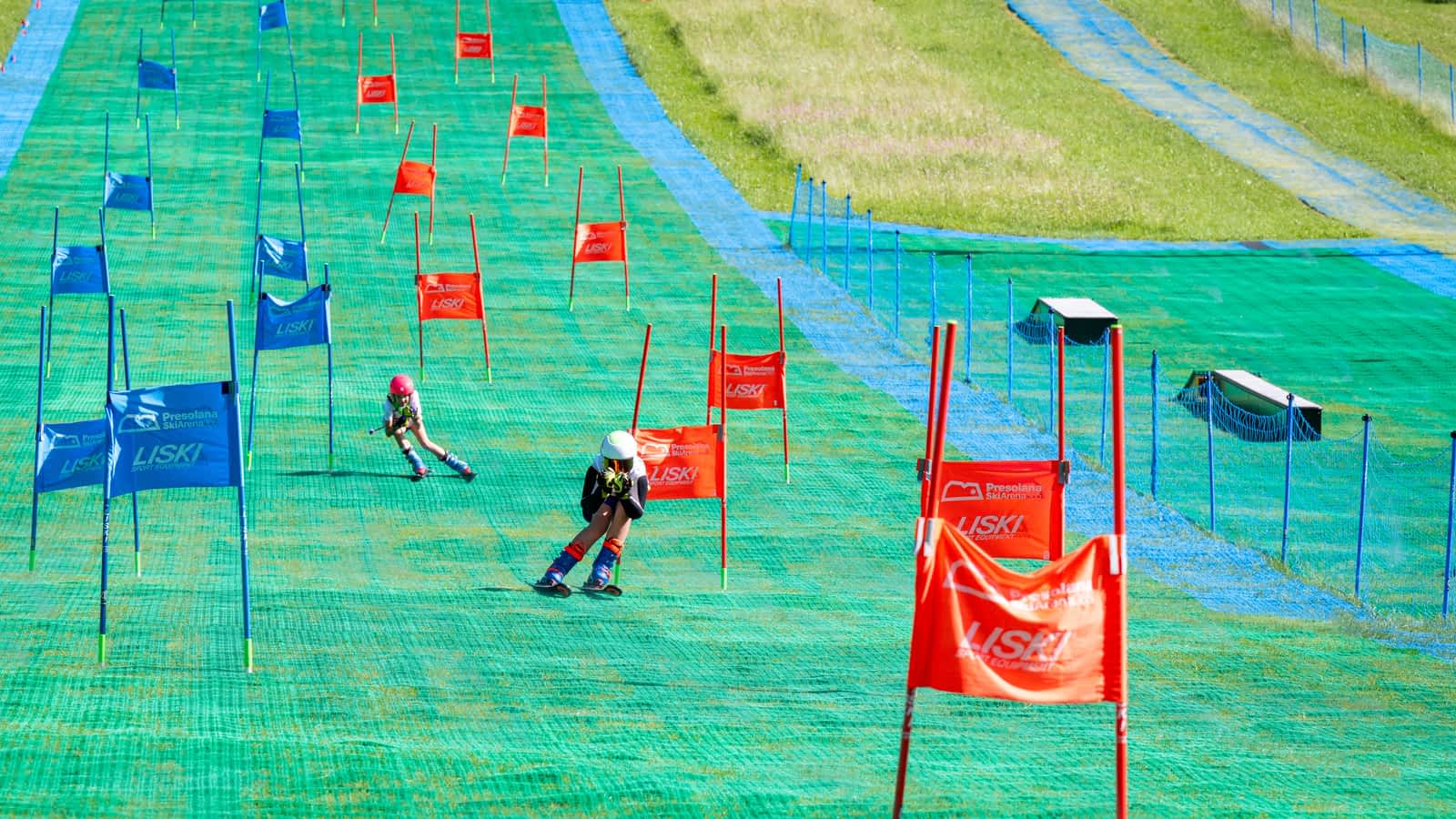
A temporary synthetic ski slope for events and Christmas villages turns any square or shopping centre into a winter attraction, without snow, cold storage or ice machines. If you are planning the festive season now, this is the practical rundown: how much space you need, which surfaces work, how the build is organised day by day, and what happens when the event ends. Neveplast's modular synthetic slopes, the Tubby tubing system and the Skiddy attraction are designed exactly for this kind of pop-up installation.
Where it works: typical use cases
The same modular approach adapts to very different settings:
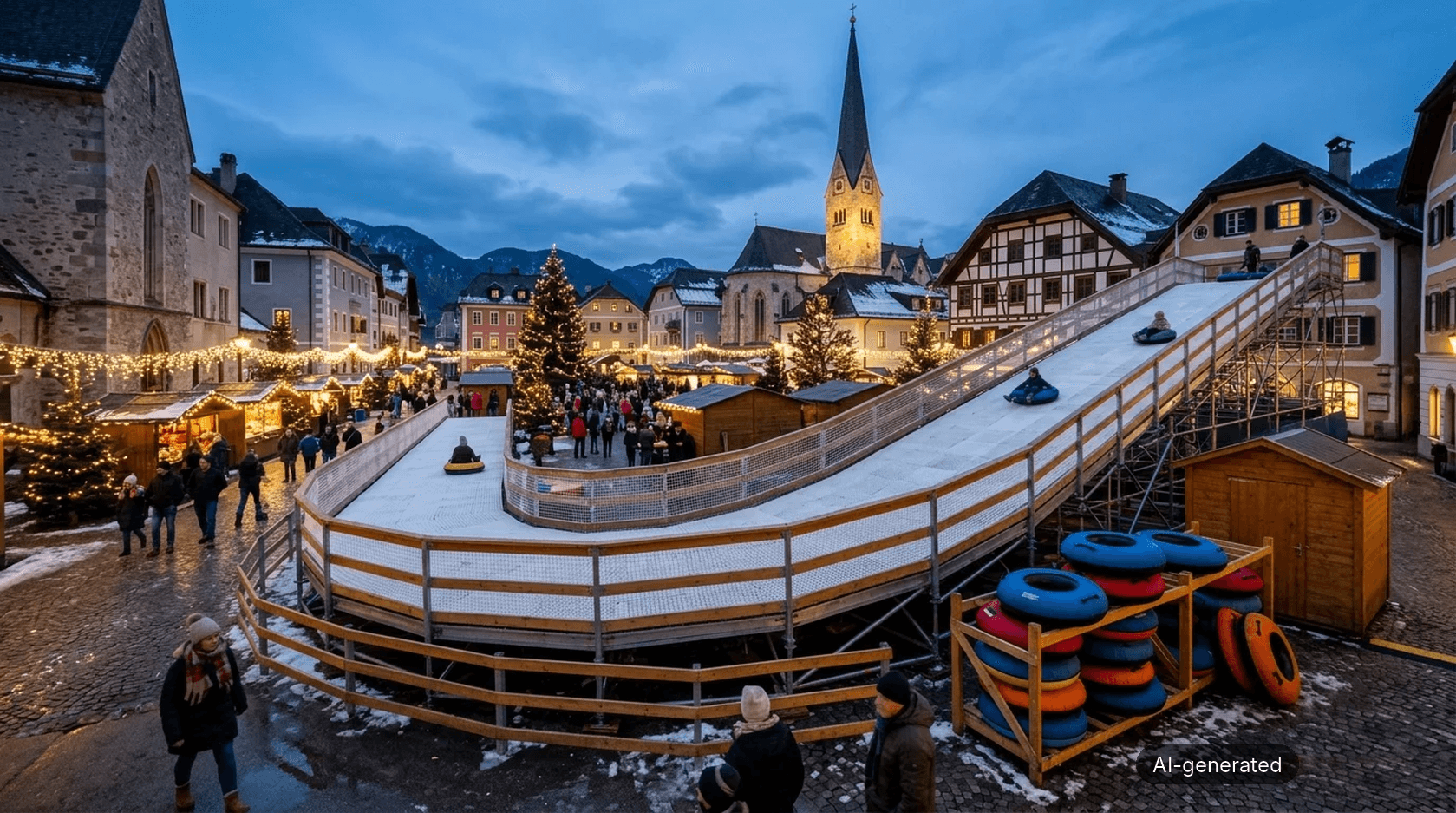
- Christmas villages and markets: a snow-free slide that families queue for, placed alongside stalls and lighting.
- Fairs and public squares: a central crowd-puller that keeps visitors on site longer.
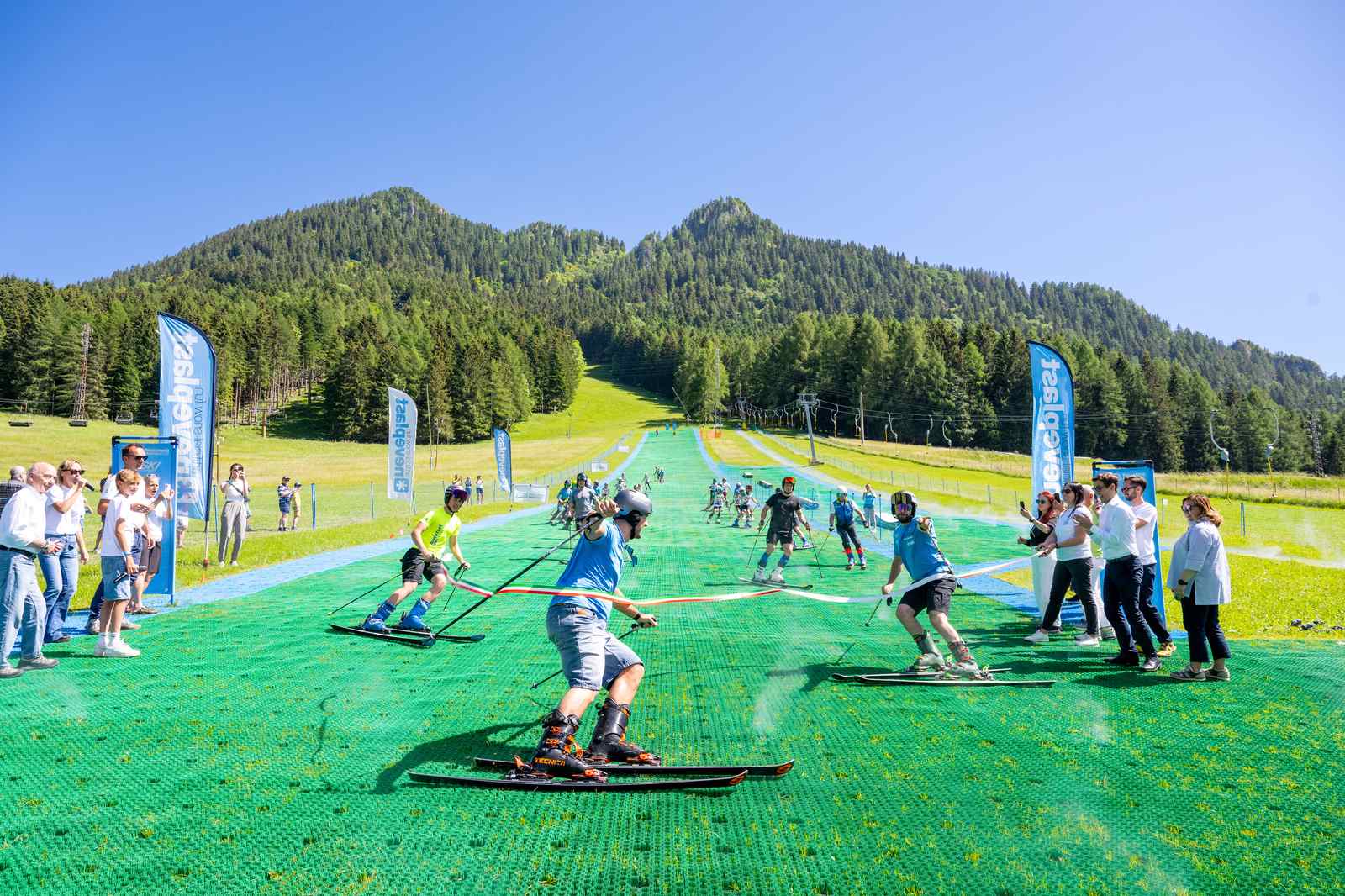
- Sports and community events: a safe downhill experience for all ages, open to beginners.
- Brand activations: a branded run with custom barriers and signage for photos and social content.
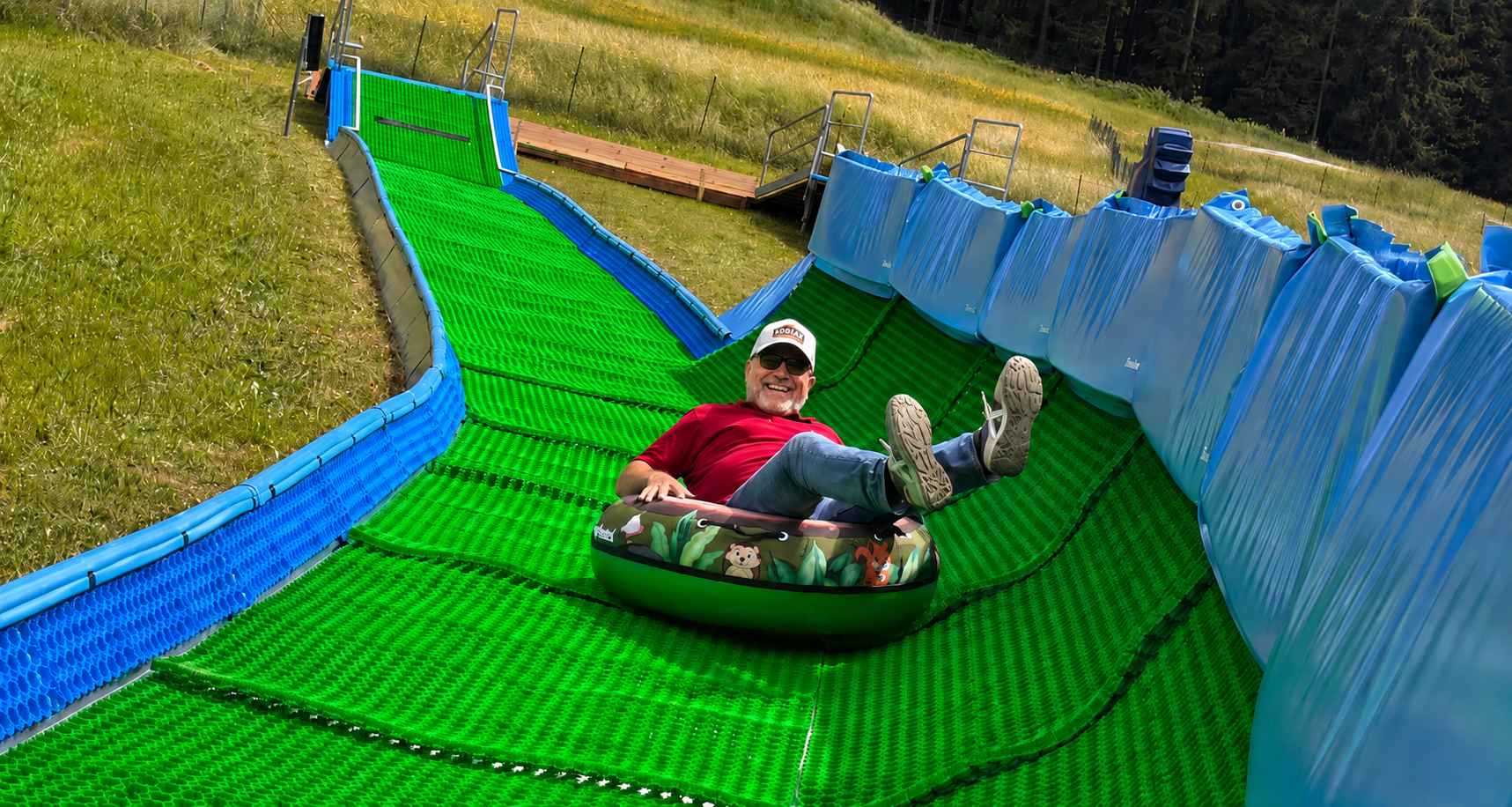
For sliding, Tubby pairs a gentle synthetic lane with inflatable tubes, while Skiddy works as a side attraction to widen the offer and spread the queues.
Space and safety checklist
Before booking a site, confirm the essentials:
- Footprint: allow for the lane length plus a flat run-out zone and a queue/return area. A compact tubing lane needs a corridor of roughly 25–40 m; larger layouts scale from there.
- Gradient: a controlled slope of about 8–15% gives a fun yet safe speed. On flat ground the structure can be built on a modular ramp.
- Base: the modular panels sit on asphalt, grass, concrete or raised decking. The surface should be reasonably even; minor irregularities are absorbed by the sub-base.
- Safety margins: cushioned braking zone, perimeter barriers, clear separation between the ascent and descent paths.
- Services: a power supply for lighting and any lift system, plus access for a delivery vehicle.
Daily running during the event
Once open, the slope needs light, predictable management:
- Staffing shifts: plan assistants for the top (dispatch), the bottom (return and safety) and queue control.
- Equipment hire: tubes, mats and protective items are typically included in the package and rotated as needed.
- Checks: a short opening inspection of panels, fixings and barriers, plus a quick visual review through the day.
- Lighting: evening programming is key for festive hours; test it before the first dusk opening.
Because the synthetic surface needs no snow or refrigeration, daily upkeep is minimal and the slide stays usable in mild weather.
Teardown, storage and reuse over the years
Dismantling mirrors the build and is usually faster. Panels, barriers and accessories are unclipped, cleaned, palletised and stored dry. The modular design means the same slope can be reconfigured and reinstalled season after season, protecting your investment and simplifying future planning. For a layout sized to your square or shopping centre, request a tailored plan rather than a generic quote.
FAQ
Does it work without snow or cold weather?
Yes. The synthetic surface is designed for year-round sliding and does not rely on temperature or snowfall.
Can it be installed on asphalt or grass?
Both, plus concrete and raised decking. Fixings are matched to the base so the site is restored on removal.
How much space is really needed?
A compact tubing lane fits in a corridor from around 25 m, with room for a run-out and queue. Larger slopes scale up from there.
How long does the build take?
Most temporary installations are ready in 2–3 days, with teardown usually quicker.
Which product suits my event?
Neveplast's modular synthetic slope is the base; add Tubby for tubing and Skiddy as a complementary attraction to serve more visitors.