Neveplast Skigarden: How to Build a Year-Round Learning Slope
Neveplast Skigarden: what it is and why it's not just another dry ski slope
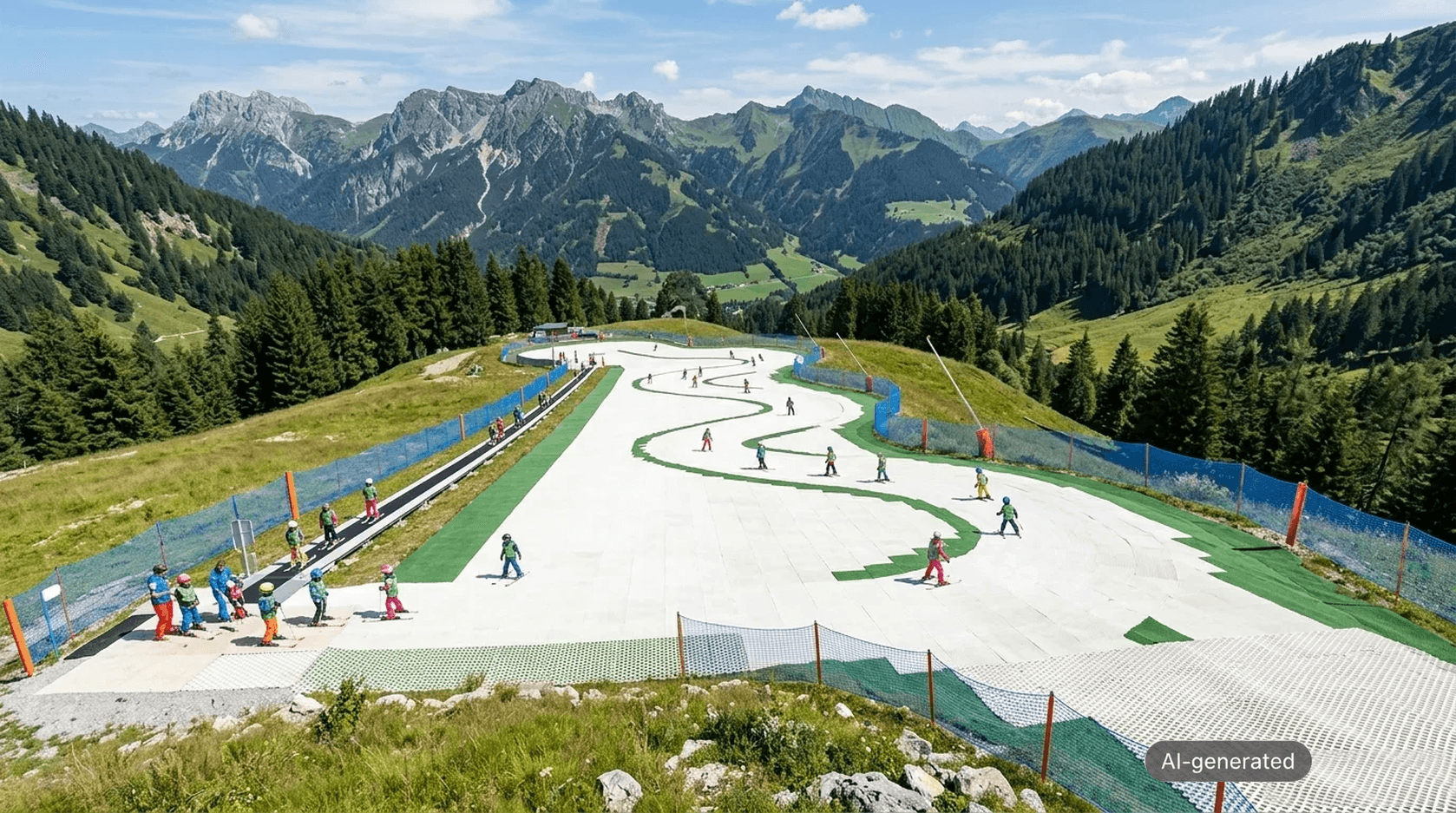
If you've been searching for a Neveplast Skigarden and wondering what it actually is, here's the short answer: it's a complete, purpose-built beginner learning area that works with or without natural snow. Unlike a generic dry ski slope, a Skigarden is designed around teaching progression, combining the Neveplast synthetic surface with dedicated uplift and perimeter protection so that first-time skiers and children can learn safely from day one.
What is a Skigarden? 5 key points
- It's a ski school area, not just a slope: its geometry is designed for teaching progressions, from the basic stance to the first turns.
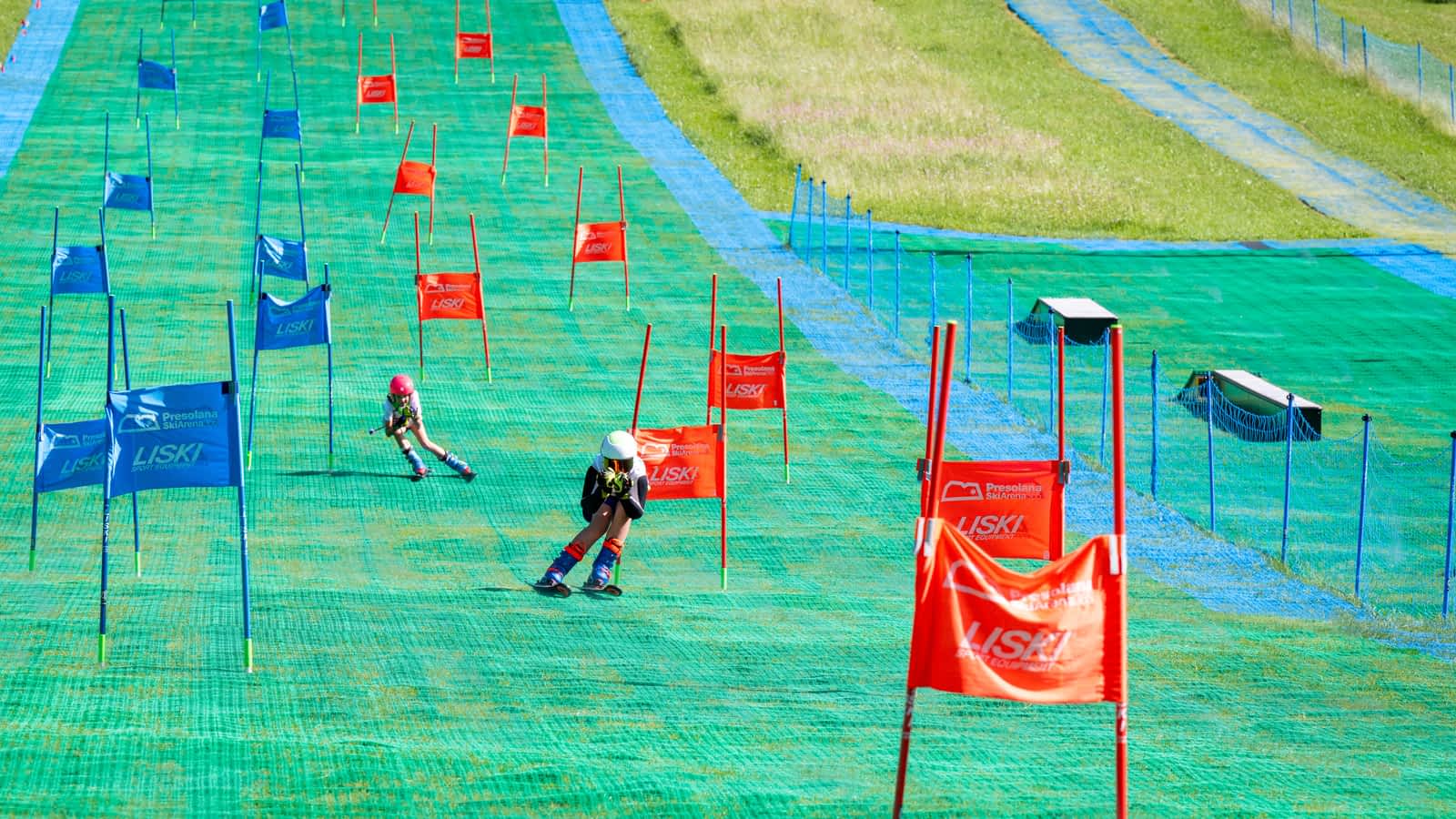
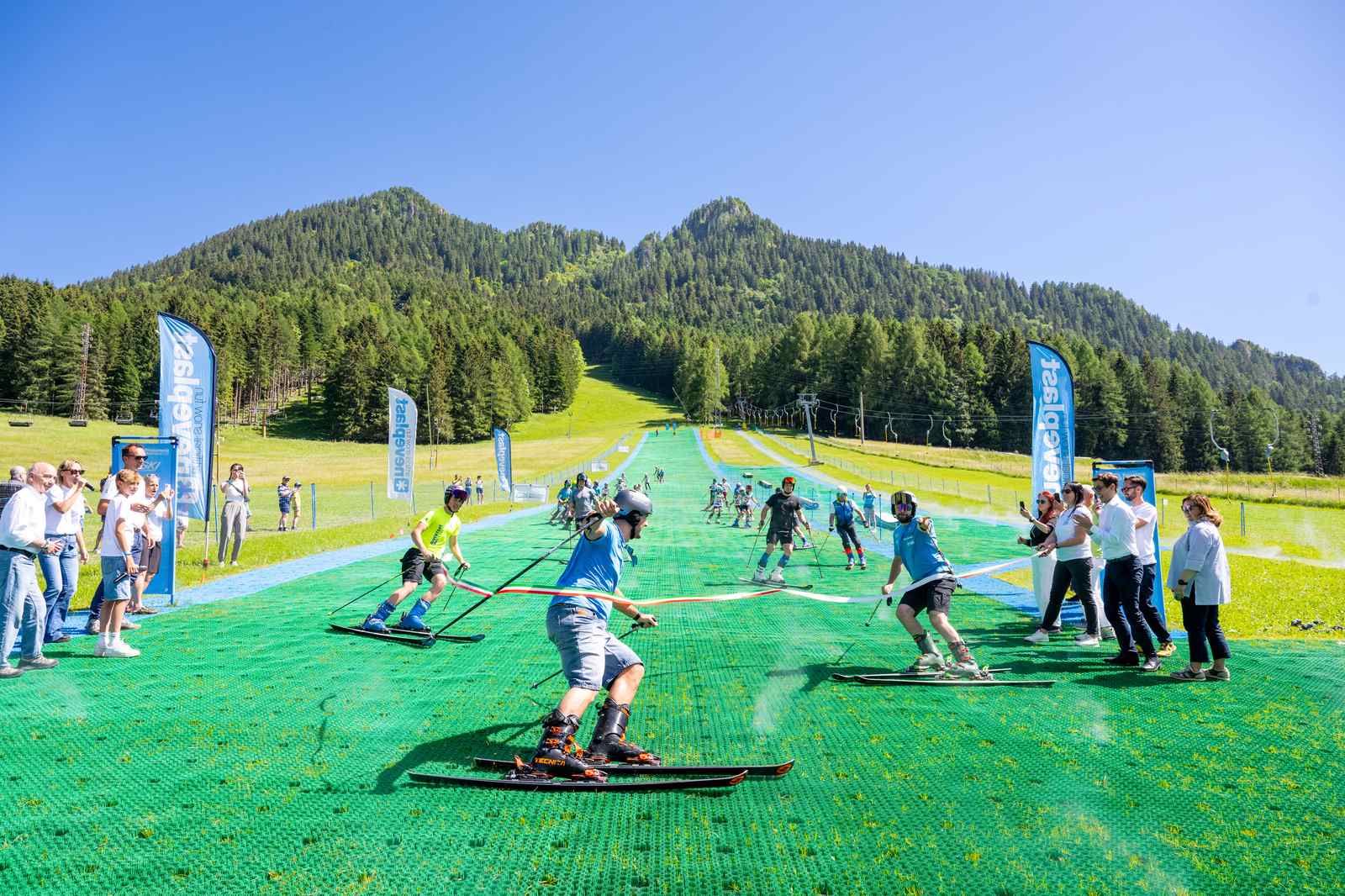
- Usable all year round: the Neveplast synthetic surface allows all-season skiing lessons in summer, autumn and whenever there's no snow.
- Lift included: a magic carpet or beginner rope tow is part of the project, enabling continuous learning cycles without fatigue.
- Modular and scalable: it is sized to fit the client's available space and teaching goals.
- Safe by design: perimeter nets and protection are built into the project from the very start.
Who the Skigarden is for
The Skigarden meets different but converging needs. Ski schools extend their season and offer courses all year round. Ski clubs gain a technical training area that is always available. Ski resorts add a service that builds family loyalty and brings in new skiers. Theme parks and urban facilities get a sports attraction that works far from the mountains, ideal for introducing a new audience to the sport.
Site requirements: space, gradients and size
The site survey is the decisive phase. It assesses orientation, ground bearing capacity and the space available for the learning area and the run-out zone. A basic beginner ski slope needs gentle, consistent gradients, generally kept low, so that beginners can control their speed; run-out zones must be flat and spacious. Gradient consistency matters more than length: a short but well-connected learning area is more effective than an irregular slope. The survey also defines access points, lift positioning and waiting areas.
How the surface and lift work together
The heart of the experience is the combination of Neveplast synthetic ski surface and beginner lift solutions. The surface provides controlled, progressive glide, ideal for first-timers; the magic carpet or rope tow brings learners back to the top without taking their skis off, multiplying the number of runs per lesson. The integration between the two, with well-calibrated entry and exit transitions, is what turns a slippery surface into a real teaching tool.
Step-by-step construction phases
- Ground preparation: levelling and smoothing the surface to achieve uniform gradients.
- Anchoring: installing fastening systems that keep the modules stable over time.
- Module installation: laying the Neveplast synthetic surface according to the layout defined at the design stage.
- Transitions: connecting the learning area, lift and run-out zones for smooth, safe transitions.
- Perimeter nets and protection: installing the perimeter safety nets and protection that enclose the area and protect learners.
- Testing and opening: technical inspection and first teaching trials before operations begin.
Safety equipment
Safety is not an add-on but a design principle. In addition to perimeter nets and protection, attention is paid to properly sized run-out zones, waiting areas kept separate from descent paths, flow signage and protection at lift entry and exit points.
Common mistakes in ski school area design
- Sizing the descent without planning an adequate run-out zone.
- Underestimating lift integration, which creates queues and downtime.
- Ignoring gradient consistency in favour of length alone.
- Postponing nets and protection instead of including them in the initial layout.
Summer and winter use
The Skigarden works in both seasons. In summer, the synthetic surface enables courses, introductory sessions and training without snow; in winter, it can be combined with natural or machine-made snow to extend the area's availability. Year-round operation is the competitive advantage for anyone investing in a permanent year-round ski slope for teaching.
Quick FAQ
Does it need a steep gradient?
No: for beginners, what matters are gentle, consistent gradients well connected to the run-out zone.
Can it really be used without snow?
Yes, the Neveplast synthetic ski surface is designed for year-round use.
Is the lift included in the project?
Yes: the magic carpet or rope tow and transitions are sized together with the learning area. For a custom layout, request a design consultation.