How Neveplast Tubby Works: A Technical Guide to the Snow Tubing Lane
What Is Tubby?
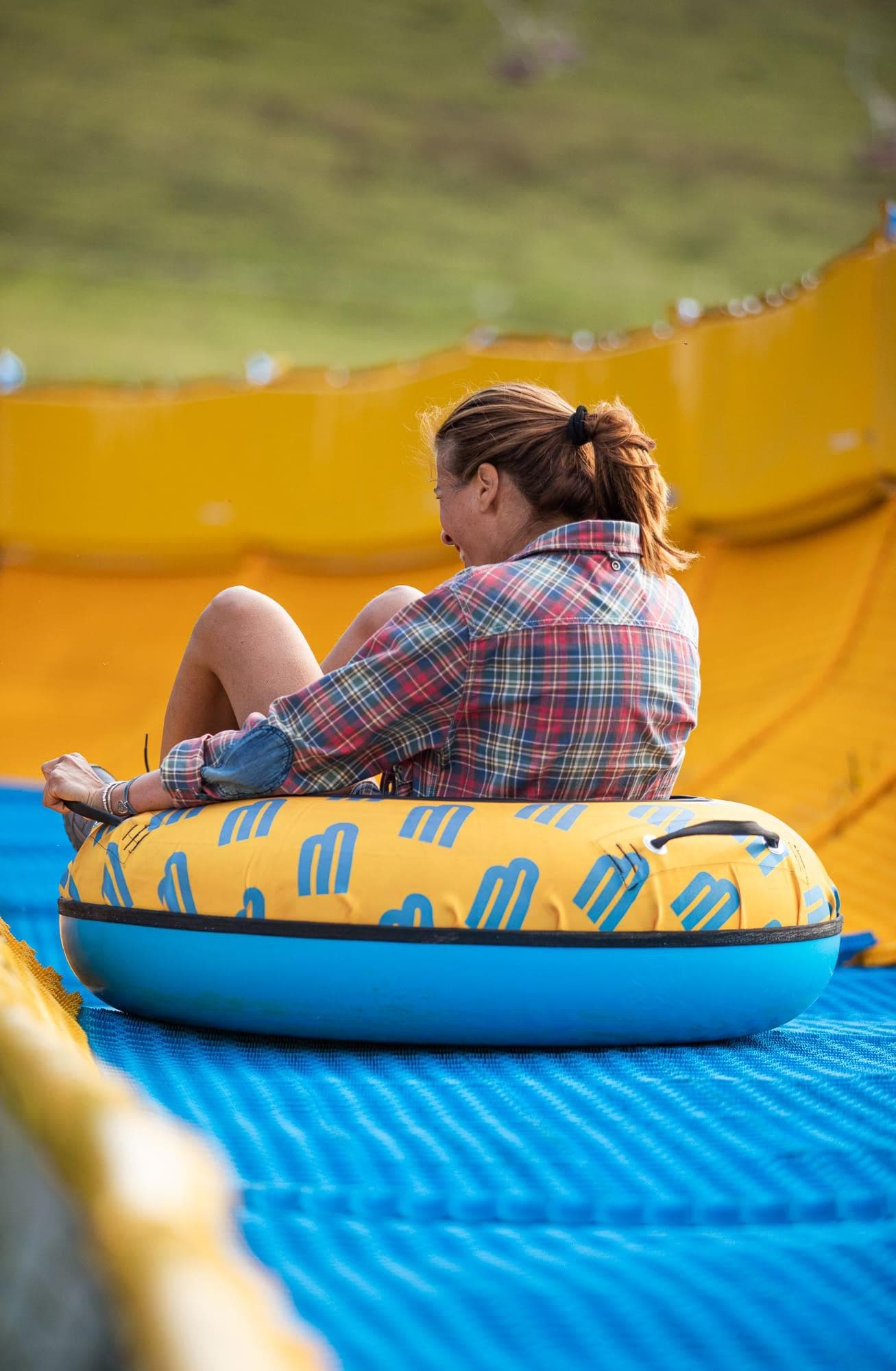
If you're researching how Neveplast Tubby works, this guide breaks down the mechanics, components and operational figures behind the system. Tubby is Neveplast's dedicated snow tubing lane: a synthetic downhill track on which guests slide inside inflatable rings (tubes). Unlike a general slope, it is engineered specifically for tubing, with defined channels, controlled braking and an integrated uplift conveyor belt. Because it runs on the patented Neveplast synthetic surface, it operates all year round — in winter and in summer, with no snow required.

How Tubby Works in 5 Steps
The user experience is simple, but each phase is technically controlled:
- 1. Boarding: guests sit into the tube on the launch platform at the top of the lane.
- 2. Launch: an operator releases the tube into the channel; the initial gradient generates momentum.
- 3. Descent: raised side walls keep the tube centred within its channel throughout the run.
- 4. Braking: the tube decelerates naturally in the flat run-out (arrival zone) — no active braking by the rider is needed.
- 5. Return uplift: guests step onto the conveyor belt, which carries them and the tube back to the top, ready for the next run.
The Components of the Lane
A complete Tubby installation is built from several integrated parts:
- Channels (lanes): parallel sliding tracks, typically 1 to 6, that separate riders for controlled, repeatable descents.
- Side walls (banks): raised edges that contain the tubes and prevent lateral exit.
- Arrival zone: a flat, extended run-out that brings each tube to a safe, gradual stop.
- Neveplast synthetic surface: the modular sliding surface that delivers consistent glide without snow, ice or water.
- Uplift conveyor belt: the return system that removes the need to climb, maximising throughput and comfort.
Technical Data and Typical Layout
Real installations vary, but these are the practical parameters operators most often ask about:
- Gradient: a working slope of roughly 10–15% provides reliable glide; the launch section can be slightly steeper.
- Length: lanes commonly range from around 40 m to 100 m or more, depending on the site.
- Footprint: allow for the lane width (multiplied by the number of channels), the run-out, and a parallel corridor for the conveyor belt.
- Tubes: purpose-built inflatable rings with a hard-wearing base, sized for the channel width.
- Installation time: a standard lane can typically be installed in a matter of days once the ground is prepared.
Hourly Capacity and Returns
Throughput depends on lane count, length and the speed of the uplift. A multi-channel Tubby lane can comfortably handle several hundred riders per hour, and the conveyor return is the key multiplier - it keeps the cycle continuous rather than limited by walking back up. For a revenue estimate, multiply realistic hourly capacity by your ticket price (in £) and daily opening hours, factoring peak and off-peak demand. Because the surface works year round, the asset generates income across all four seasons rather than a single winter window.
Safety and Compliance
Safe operation relies on a few consistent rules:
- One trained operator manages launch spacing to maintain a safe gap between tubes.
- Riders remain seated in the tube; no additional braking action is required.
- The extended arrival zone is kept clear at all times.
- Only approved tubes are used, with condition checks before opening.
Install and operate the system in line with the relevant UK health and safety guidance and the manufacturer's specifications, and keep a documented daily inspection routine.
Maintenance
The synthetic surface is designed to be low-maintenance. Day to day, keep channels clear of debris and inspect tubes for wear. At end of season, carry out a full inspection of surface modules, side walls, fixings and the conveyor belt, then store tubes correctly. Compared with snow-based systems, there is no snowmaking, grooming or water dependency — a major operational saving.
Complementary Attractions
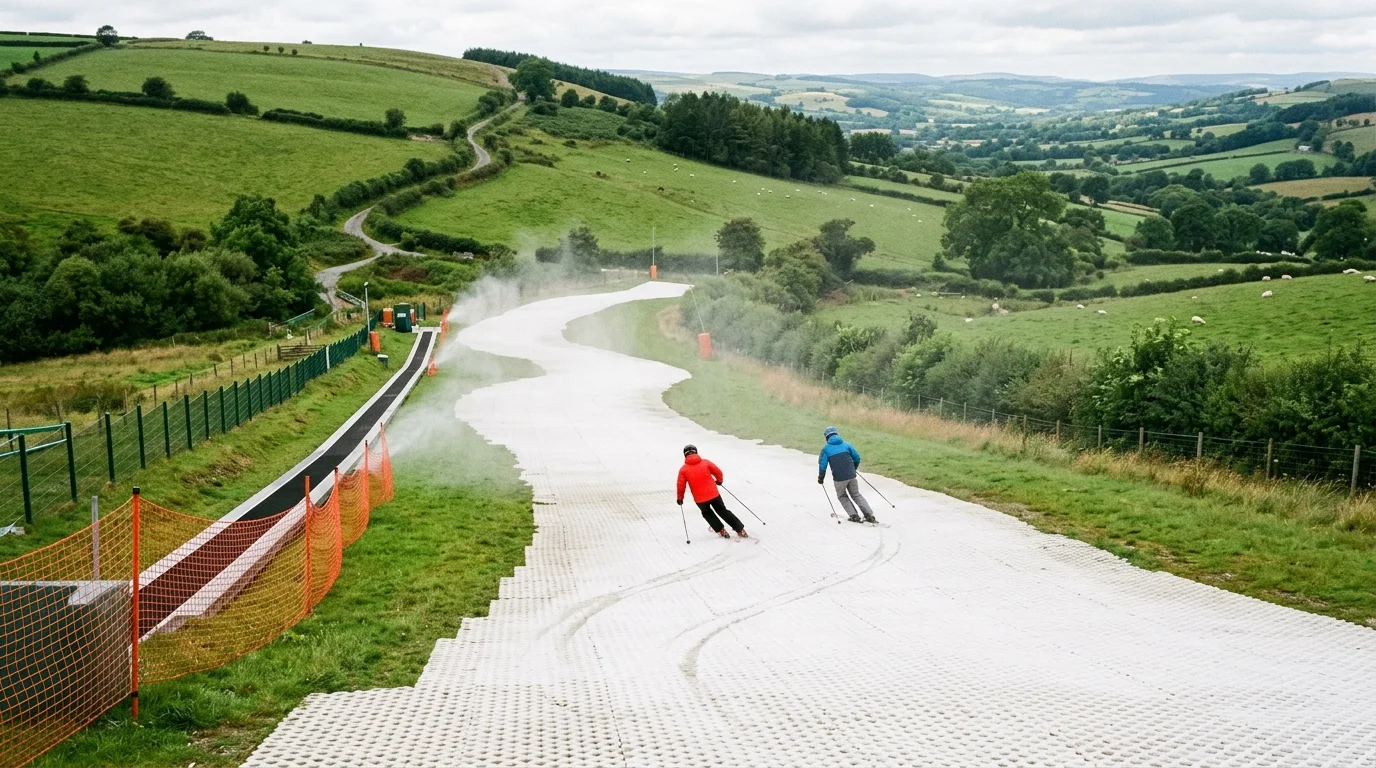
Tubby pairs naturally with other Neveplast products. Skiddy offers a compact sliding experience for smaller sites, while full synthetic ski slopes extend the offer to skiing and snowboarding — all built on the same all-season Neveplast surface, letting you diversify a single venue.
FAQ
Does Tubby need snow?
No. The Neveplast synthetic surface delivers consistent glide in both winter and summer, without snow, ice or water.
How many people can it handle per hour?
A multi-channel lane with a conveyor uplift can manage several hundred riders per hour, depending on configuration.
What gradient and length are needed?
A working slope of around 10–15% and lanes from roughly 40 m upward are typical, adapted to your site.
How long does installation take?
A standard lane is usually installed within a few days once groundworks are complete.