
Dry Ski Slopes Explained: The Definitive Guide for Resorts, Clubs & Sports Centres
What is a dry ski slope?
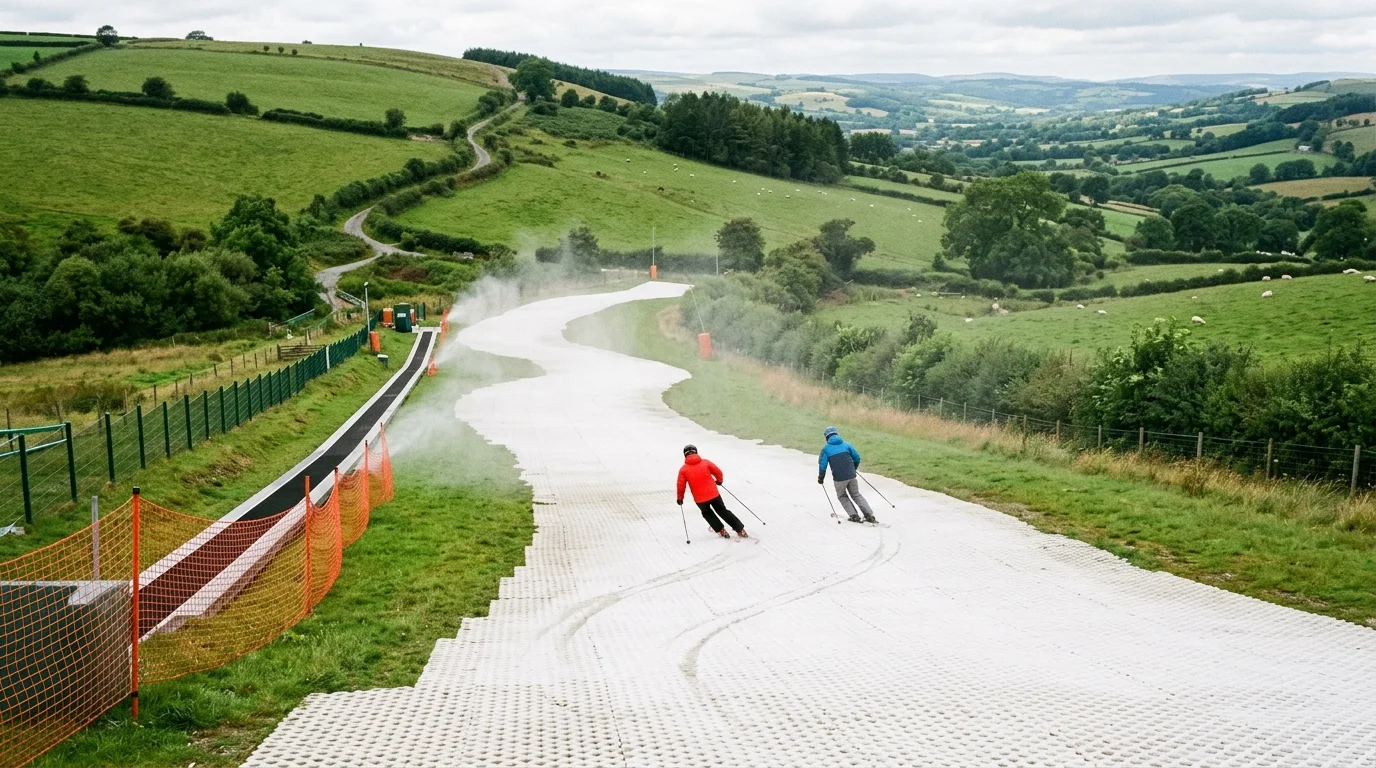
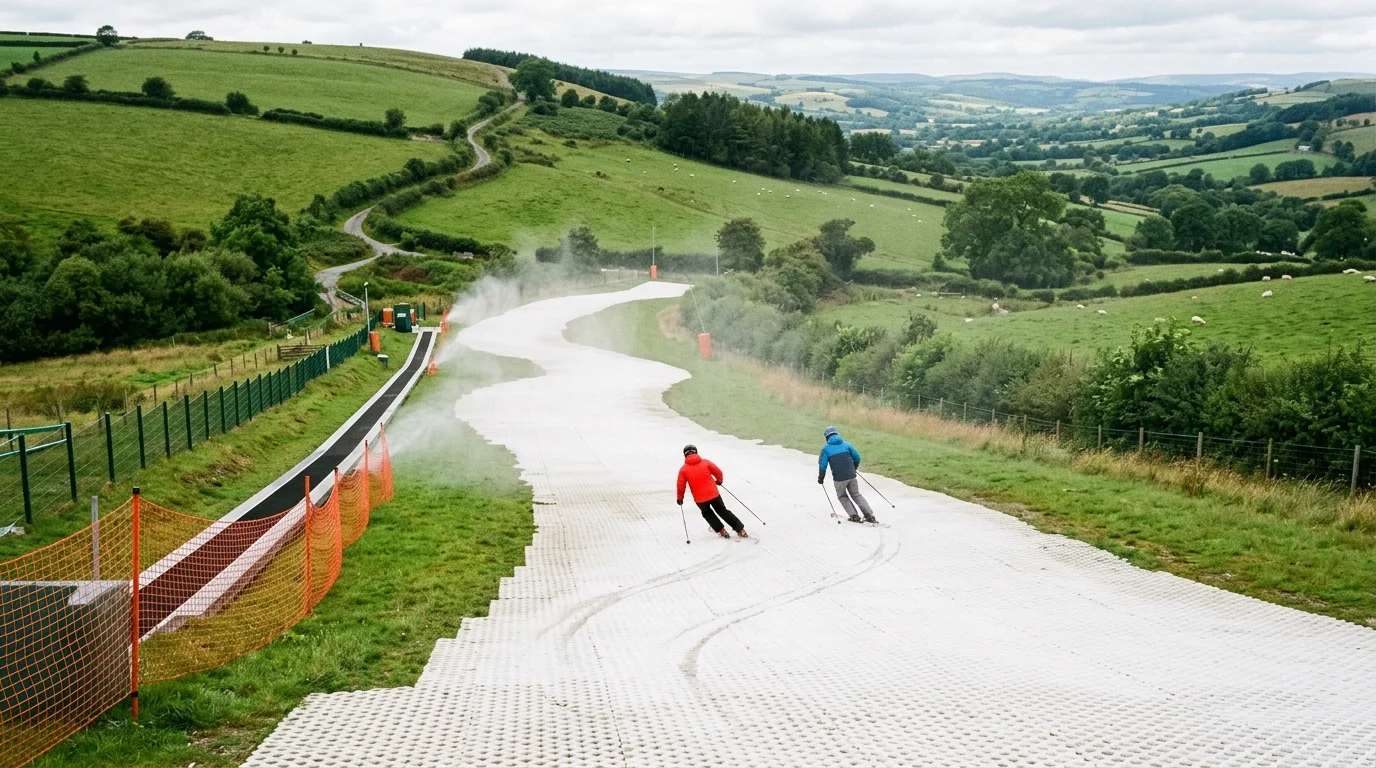
A dry ski slope is an artificial ski surface that lets people ski and snowboard without snow, using synthetic matting that mimics the glide and grip of piste. Popular across the UK since the 1960s, modern dry slopes support beginner lessons, race training, freestyle and snow tubing all year round, in almost any weather.
For operators of resorts, sports centres and ski clubs, a dry slope is one of the most cost-effective ways to generate reliable, weather-independent revenue. This guide answers the practical questions - how it works, what it costs, how safe it is and how long the surface lasts.
How does a dry ski slope work?
Skis and boards glide on an engineered polymer surface rather than snow. Older dendix systems used a bristled, brush-like matting that offered adequate glide but higher friction and greater abrasion during falls. Newer synthetic surfaces use interlocking modular tiles with a smoother, more snow-like feel, better edge grip and improved safety on impact.
Most installations are paired with a lubrication or misting system that keeps the surface damp, reducing friction and cooling the mat in warmer months. Uphill transport is handled by a ski conveyor (magic carpet), ideal for beginner and family zones where lifts would be impractical.
Dry slope vs indoor snow vs snowmaking
| Option | Feel | Running cost | Weather-proof | Best for |
|---|---|---|---|---|
| Modern synthetic slope | Close to real snow | Low | Yes | Year-round training & leisure |
| Dendix matting | Firm, higher friction | Low | Yes | Budget refurbishments |
| Indoor real snow | Authentic | Very high | Yes | Large capital projects |
| Outdoor snowmaking | Authentic | High | No (needs cold) | Mountain resorts |
Compared with an indoor snow centre, a synthetic dry slope removes the enormous cost of refrigeration and eliminates the need for below-zero temperatures required by snowmaking—making it far more viable for lowland UK sites.
Neveplast synthetic surfaces
Neveplast manufactures modular synthetic ski surfaces engineered for realistic glide and durability, with more than 1,000,000 m² installed worldwide. The systems handle gradients suitable for everything from gentle nursery areas to competitive slopes exceeding 30% incline, and are complemented by ski conveyors and dedicated snow tubing lanes for diversified, family-friendly revenue.
Use cases for UK operators
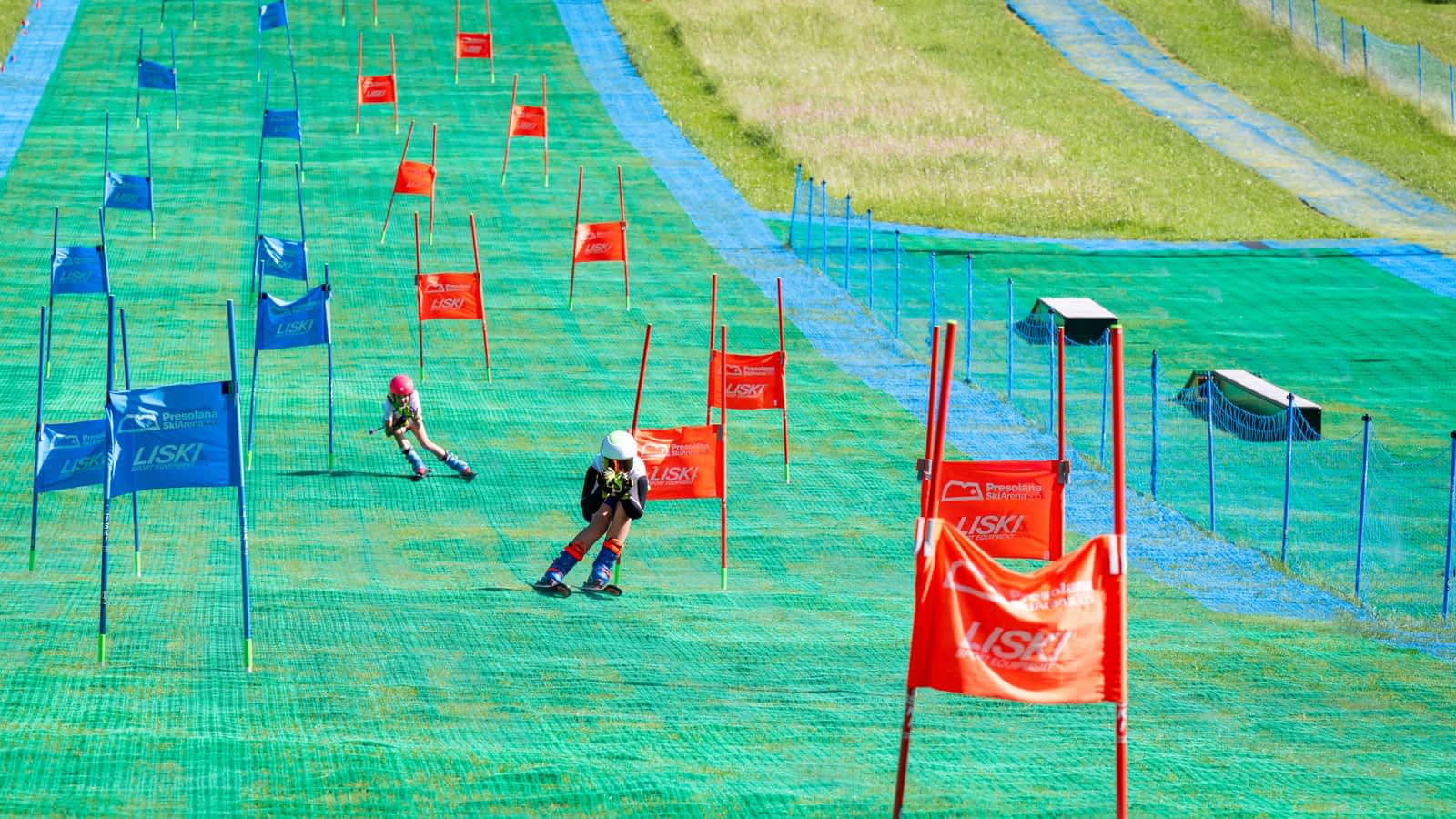
- Ski club training slope: race gates, moguls and consistent surfaces for regional squads.
- Family snow park: gentle synthetic pistes served by a magic carpet for lessons and casual sessions.
- Snow tubing lane: low-skill, high-throughput attraction that appeals to birthday parties, schools and corporate groups.
- Dry-land training: pre-season conditioning for skiers and boarders heading to the Alps.
Is it safe for beginners?
Yes. Modern synthetic surfaces are specifically designed to reduce abrasion on falls compared with legacy dendix, offering a more forgiving, snow-like response. Combined with correct gradients, run-off zones and a conveyor for uphill transport, dry slopes are widely used for first-time lessons and children's programmes. Standard practice includes helmets, gloves and long sleeves.
How long does the surface last?
Quality synthetic matting typically delivers 10 - 15 years of service with routine maintenance, depending on usage intensity, UV exposure and cleaning. Modular tiles allow damaged sections to be replaced individually rather than resurfacing the entire slope - protecting long-term ROI.
FAQ
Do dry ski slopes need water?
Most use a light misting system to reduce friction and cool the surface, but far less than snowmaking or refrigeration.
Can you snowboard on a dry ski slope?
Yes, modern surfaces support skiing, snowboarding, freestyle and tubing.
What is the ROI?
Weather independence and low running costs support year-round income across lessons, hire, events and tubing, spreading revenue beyond the winter season.