Dry Ski Slope vs Snowmaking: Which Is Really Worth It?
Budget decisions for the winter are usually signed off in September, which makes it the right moment to ask a practical question: dry ski slope or snowmaking — which is worth it for your site? This guide compares synthetic ski slopes and programmed snowmaking on cost, opening days, water and energy, so resort operators, councils and park managers can plan with numbers rather than assumptions.
The two technologies in brief
Snowmaking produces artificial snow by atomising water and compressed air through snow guns or lances. It needs sub-zero wet-bulb temperatures (roughly below −2°C to −4°C), a water supply, pumping infrastructure and energy. It delivers a natural skiing feel but depends entirely on the weather window.
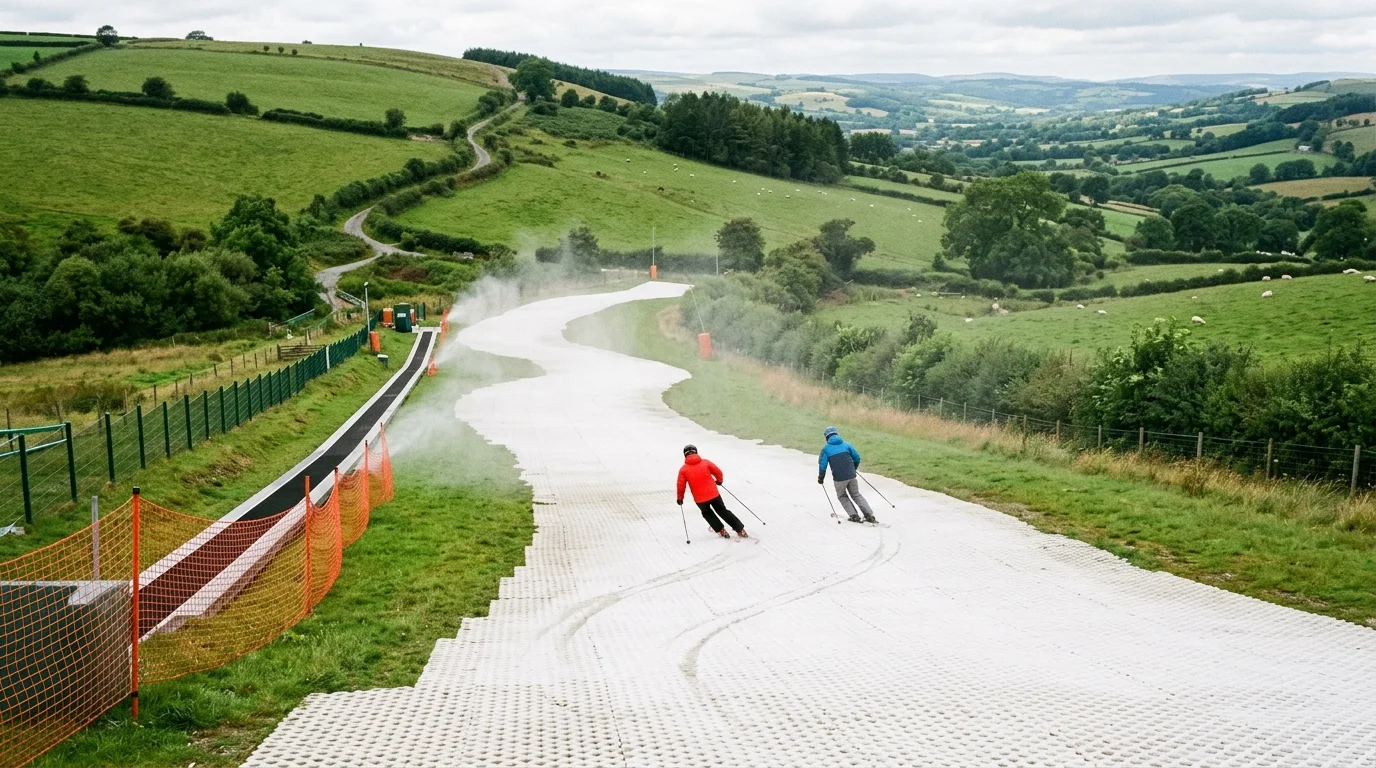
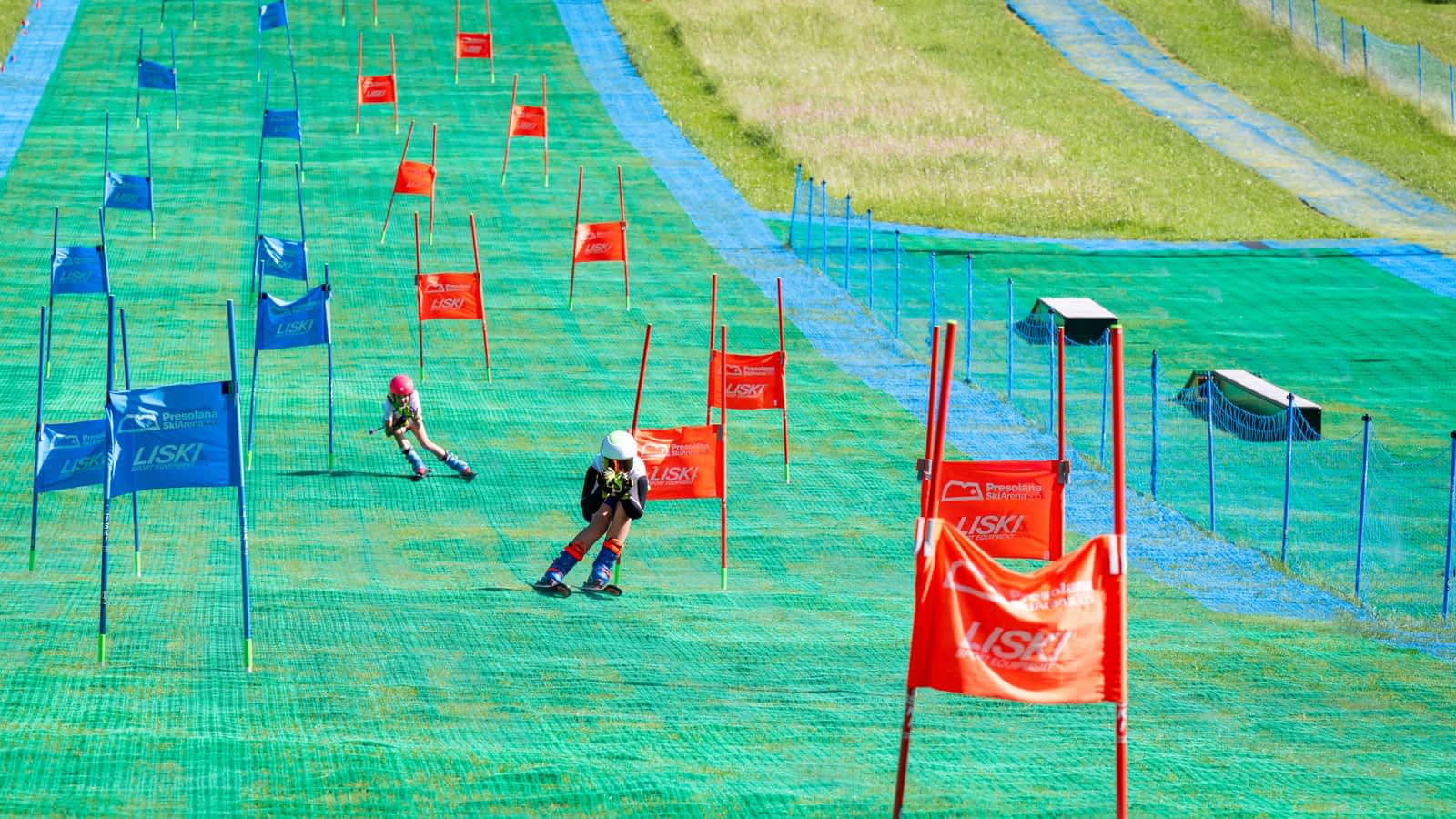
Synthetic (dry) ski slopes are engineered surfaces installed once and skied on in any weather, at any altitude, and across all four seasons. Neveplast synthetic ski slopes reproduce the glide of real snow, while beginner areas can be equipped with training mats, Neveplast Skiddy for children's first turns, uphill conveyor lifts and summer tubing that adds a second revenue stream outside the ski season.
Comparison table: the numbers side by side
| Factor | Snowmaking | Synthetic ski slope |
|---|---|---|
| Initial cost | High for pumps, pipes, reservoirs and guns; typically £70,000–£140,000+ per hectare to equip | One-off surface investment, then minimal ongoing spend |
| Annual running cost | Significant: water, electricity, seasonal staff, maintenance | Low: periodic checks and occasional panel replacement |
| Weather dependence | High — needs cold, dry conditions | None — usable in any temperature |
| Water use | Roughly 1 million litres to cover 1 ha at 30 cm depth | None for operation (light watering optional) |
| Energy use | High during production windows | Only lifts/conveyors |
| Opening days | Weather-limited; increasingly volatile in mild winters | Effectively 365 days, day and night |
| Maintenance | Ongoing grooming, plant upkeep | Low and predictable |
Figures are indicative and vary with altitude, plant size and energy tariffs; always model against your own site.
Three typical scenarios
1. Low-altitude beginner area
A nursery slope below 800 m rarely gets a reliable cold window. Snowmaking here is expensive and unpredictable. A Neveplast beginner area with training mats, a conveyor lift and Skiddy delivers guaranteed lessons every day of the season - and a faster payback.
2. Mid-sized resort
An established resort with cold main pistes can keep snowmaking where it works, while converting the nursery zone to synthetic to protect lesson income during warm spells. This is where the hybrid model shines (see below).
3. Summer park or leisure venue
Parks with no winter cold can still generate year-round revenue with a synthetic slope plus summer tubing, attracting families and school groups in spring and summer when competitors are closed.
When the hybrid solution makes sense
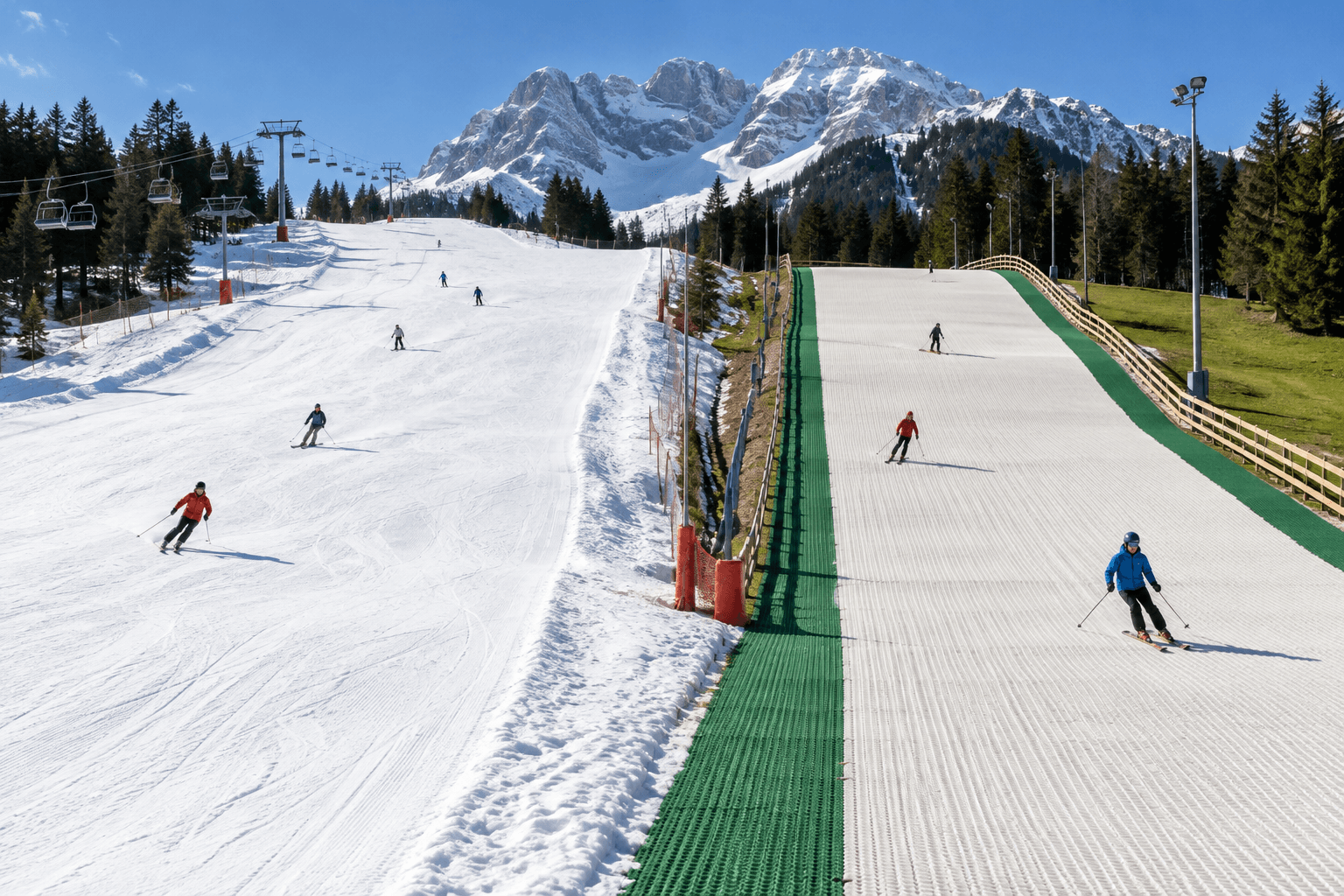
The most resilient answer is often both: synthetic surfaces on the nursery slope and beginner zones, with programmed snowmaking on the main pistes. This locks in daily lesson and rental income regardless of temperature, reduces water and energy demand on the busiest teaching area, and keeps the high-quality snow experience where advanced skiers expect it. Summer tubing then extends the season and spreads the fixed costs across the whole year.
5 criteria to choose
- Altitude and climate: the milder your site, the stronger the case for synthetic.
- Guaranteed opening days: if lesson revenue must be certain, synthetic removes weather risk.
- Water and energy costs: rising tariffs and abstraction limits favour low-consumption surfaces.
- Payback horizon: compare a one-off investment against recurring seasonal running costs.
- Year-round revenue: factor in summer tubing and off-season use.
FAQ
Does a synthetic slope feel like real snow?
Modern Neveplast surfaces closely reproduce the glide and edge grip of snow, and are widely used for both training and public skiing.
How much water does snowmaking use?
Covering one hectare with about 30 cm of machine-made snow can require in the region of one million litres of water, plus the energy to pump and atomise it.
Can I keep snowmaking and add synthetic?
Yes. A hybrid setup — synthetic on beginner areas, snowmaking on main pistes — is often the most cost-effective and weather-proof choice.
What is the main advantage of a dry ski slope?
Guaranteed opening in any weather, low running costs and year-round use, including summer tubing.