Choosing a Synthetic Ski Surface: A Decision Checklist for Operators
Dry ski slope alternatives: start with the use case, not the material
Operators researching dry ski slope alternatives and synthetic skiing surfaces rarely need another list of materials. What they need is a decision path: a way to match a surface to how it will actually be used, and a set of criteria to compare suppliers fairly. This checklist does exactly that, without a single price tag, so you can brief your team and shortlist vendors with confidence.
Begin by naming your scenario. The right synthetic slope for a theme park is not the right one for a race-training hall.
- Amusement park: high footfall, mixed ability, entertainment focus.
- Learn-to-ski area: gentle gradients, frequent falls, beginner confidence.
- Indoor training centre: repeatable glide, realistic feel for carving and edging.
- Retail or transit attraction: compact footprint, quick turnover, visual impact.
- Private installation: limited maintenance crew, year-round readiness.
What operators really want from an alternative
Behind every search for synthetic skiing surfaces is a short list of unspoken priorities: a realistic feel for guests, predictable upkeep, fast repairs, and a supplier who answers the phone after installation. Keep these in view as you apply the criteria below.
7 criteria to compare synthetic skiing surfaces
Use these as scored line items when you evaluate each option.
- Glide and real-ski feel: Does the surface work with standard ski and snowboard equipment, and reward correct technique? Training environments need consistent, repeatable glide; attractions can prioritise accessible fun.
- Water lubrication: Some surfaces require a continuous water misting system to perform; others glide dry. Dry-running surfaces reduce plumbing, runoff management and seasonal shutdowns.
- Drainage and substrate: Clarify what base is required — compacted aggregate, concrete, or an adjustable sub-frame — and how water or debris clears. Poor drainage is a hidden cause of downtime.
- Safety and fall absorption: Beginner and family settings demand forgiving impact behaviour and low abrasion. Ask for independent test data, not adjectives.
- Modularity and repairability: Can a single damaged element be lifted and swapped without resurfacing the whole run? Modular tiles keep a slope open during minor repairs.
- Durability and routine maintenance: What does weekly upkeep look like, and how does the surface behave under UV, heavy use and temperature swings over years, not weeks?
- Supplier support and references: Installation know-how, spare-part availability and reachable, comparable installations matter more than any brochure claim.
Comparison by surface type
| Surface type | Typical fit | Water needed | Repair approach |
|---|---|---|---|
| Modular synthetic mat | Parks, learn-to-ski, training | Often dry-running | Swap individual elements |
| Brush / bristle matting | General slopes | Sometimes | Section replacement |
| Lubricated membrane systems | High-glide training | Yes | Patch or re-lay panels |
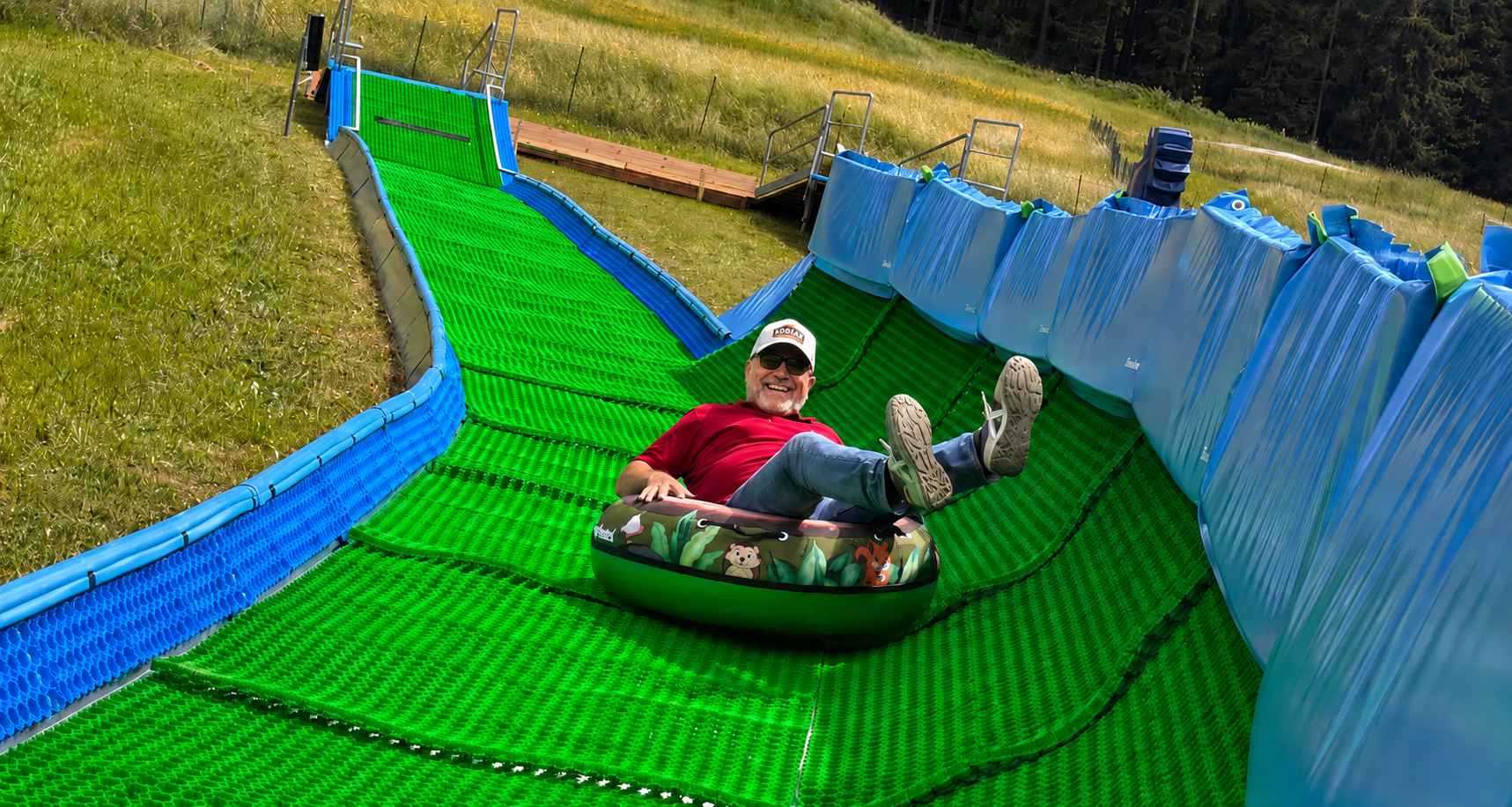
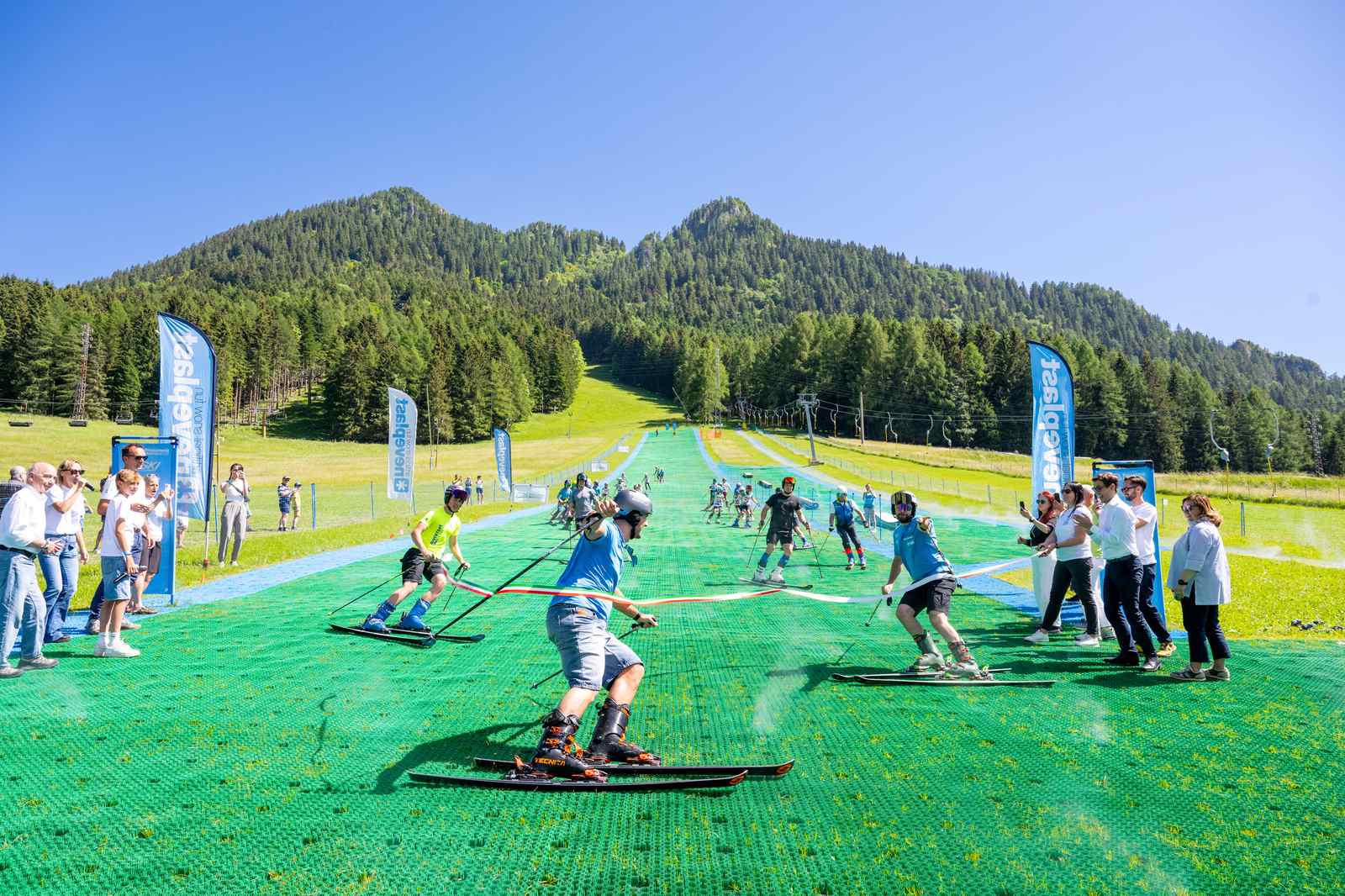
The Neveplast modular synthetic mat illustrates one family available to operators: an interlocking system designed for standard ski equipment, with individually replaceable elements. Alongside it, Skigarden targets compact learn-and-play areas, while Tubby snow tubing delivers a high-throughput attraction for guests with no skiing experience. Treat these as examples of how one portfolio spans several use cases — then test them against your own criteria.
Common mistakes when choosing on the spec sheet alone
- Buying on glide numbers only: lab figures ignore guest mix, gradient and fall frequency.
- Ignoring substrate cost and complexity: the surface may be simple while the base is not.
- Overlooking repairability: a slope that must close fully for small fixes loses revenue.
- Underrating support: a distant supplier turns a minor issue into weeks of downtime.
- Forcing one surface onto every scenario: training, play and tubing have different demands.
Define your scenario, score the seven criteria, and ask the questions above before committing. When you are ready to compare options for your project, request a tailored assessment and quotation from Neveplast rather than relying on generic figures.